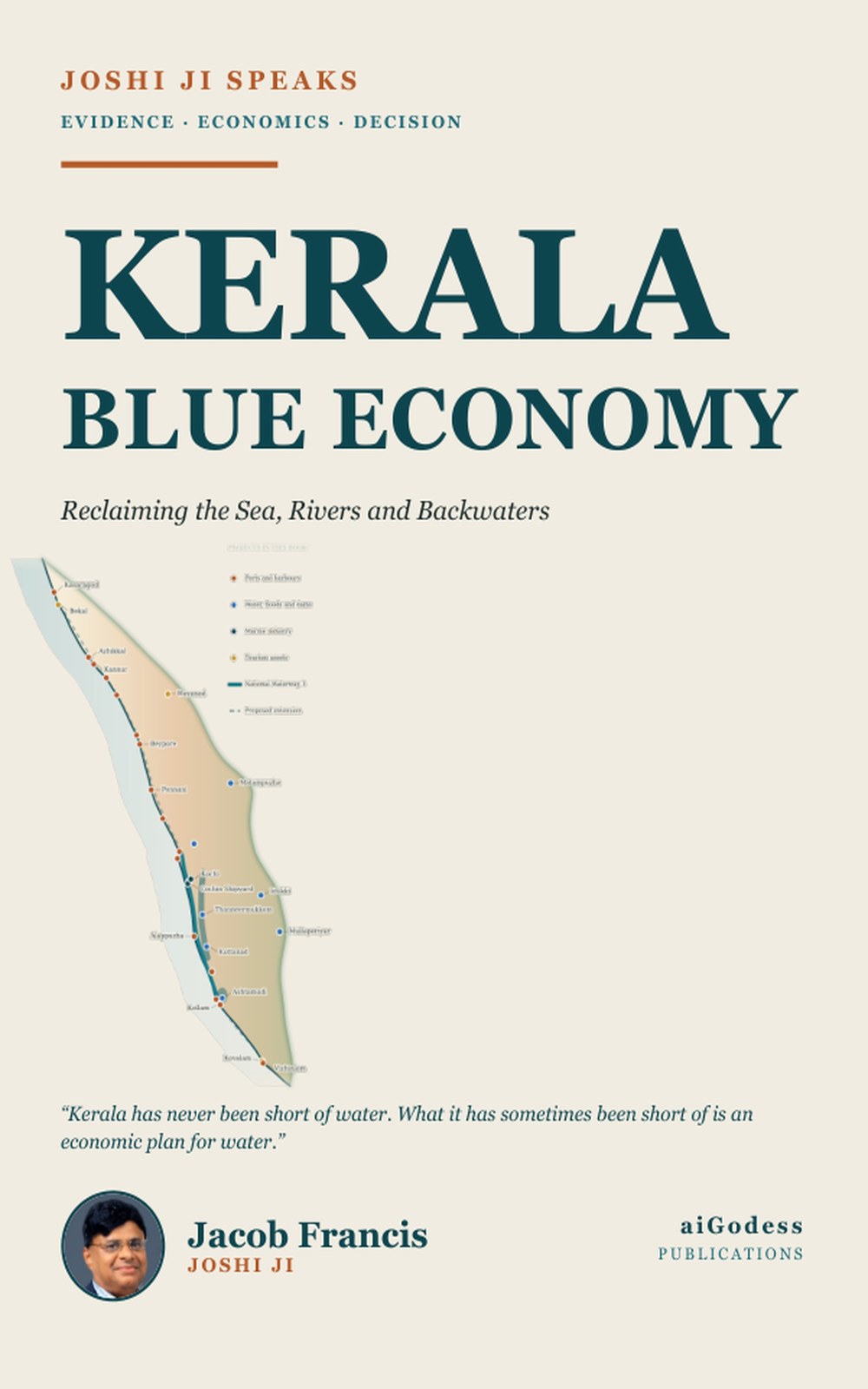
Kerala Blue Economy
Reclaiming the Sea, Rivers and Backwaters
A Blue Economy is not a water project. It is an economic system. Kerala has 590 kilometres of coast, a waterway network measured in hundreds of kilometres, and a new deep-water container port at Vizhinjam. It also has a freight system that moved onto the road and never came back, ports that lost their cargo, and a flood record that keeps repeating. This book asks one question of all of them: how much of what moves through Kerala’s water actually stays in Kerala? Across 45 chapters it tests each opportunity against the published record — feasibility, finance, employment, ecological limit, and who actually pays. It examines what Vizhinjam changes and what it does not. It asks whether dredging can pay for navigation, what really happened in the floods, and whether the state can earn from what it must remove anyway. Where the record does not support a conclusion, it says so and stops. It is not a manifesto and it promises no growth rate. It is an argument about how a state that was built on water might make a living from it again — set out so that a reader can check every step. Written by a financial controller who spent eighteen years on large infrastructure contracts for state energy companies, sovereign development bodies and a national convention centre. A book about public money, by someone whose job was controlling it.
- Vizhinjam: from transshipment port to a blue economy
- The 616-kilometre blue highway — can water beat the truck?
- Floods, Kuttanad, and the economics of preventing the next one
See all 33 books